
Devhouse · 2023
Colosseum Champions
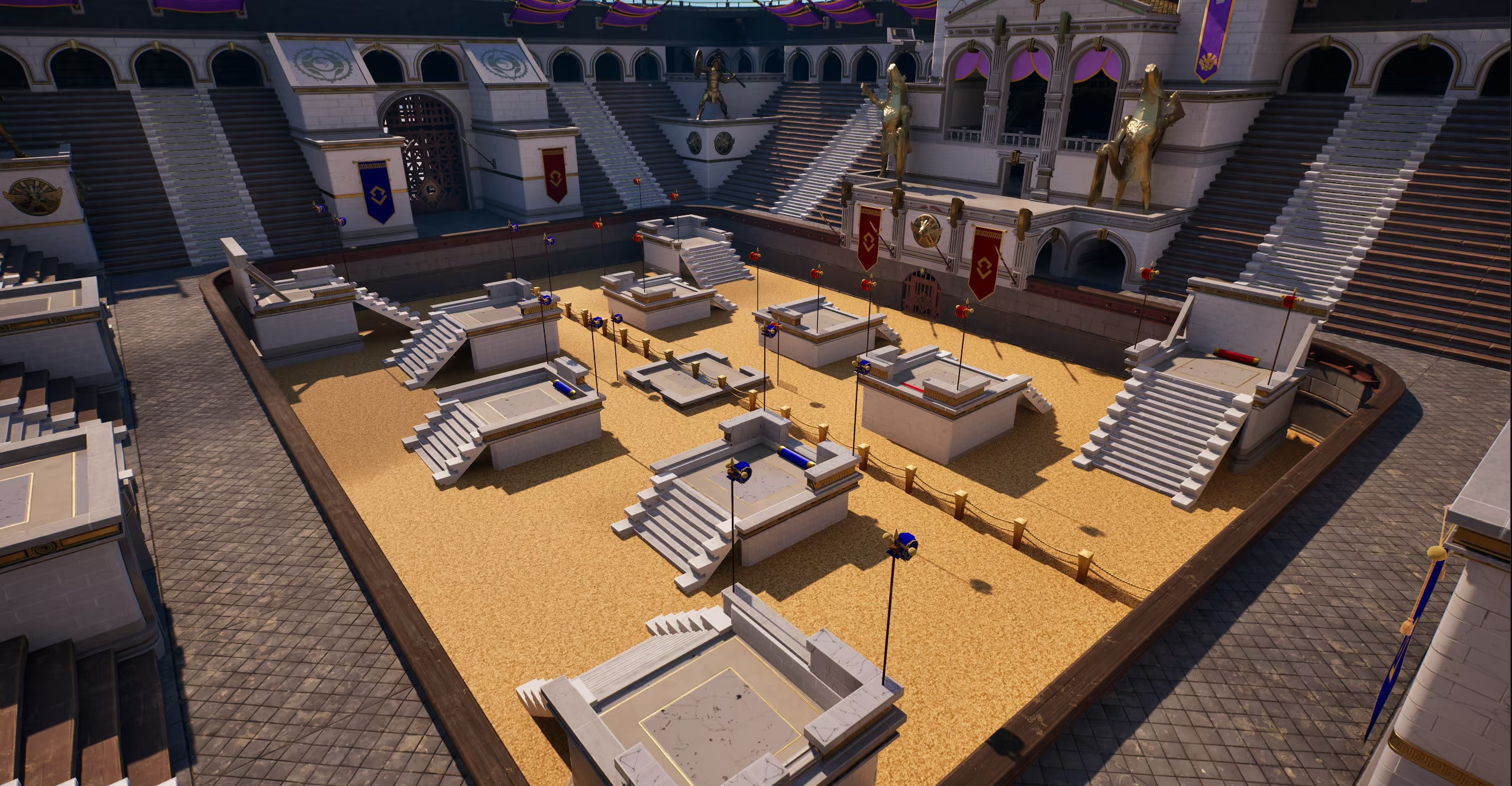
Colosseum Champions is a fast-moving Fortnite control-point game where two teams battle to take every tower on their side of the arena. Devhouse built the Verse-driven weapon system that matches balanced loadouts to each tower and refreshes them every round, then shaped the modular arena, lighting, and performance work to keep every match readable and responsive.
01 Background
A control-point arena built for variety.
Colosseum Champions puts two teams in a fight for control points across an arena of towers. A team wins by taking control of its whole side of the map.
Each control point gives players a random weapon chosen to suit that tower’s position, keeping matches varied without handing a close-range weapon to a back-line tower or a sniper rifle to the front.
02 Challenge
Make each tower worth fighting for.
The towers needed to do more than mark objectives. They had to create useful cover, support the weapon rules at each control point, and stay visually interesting across the arena. Lighting and the layout also had to work within the project’s memory budget.
03 Technical approach
Tie gameplay rules, environment work, and lighting together.
Devhouse wrote a Verse script that grants balanced random weapons at each tower and shuffles those weapons every round.
The team kitbashed the tower models to add cover players could crouch behind, then used real-time lighting techniques to reduce memory overhead. That included asynchronously loading lights, minimizing lighting overlap and shadow count, and setting up a global post-processing volume for the desired color treatment.
04 Outcome
A more varied, readable arena.
Tower-based weapon rules
A Verse system assigns random, balanced weapons to each control point based on its position and refreshes the selection every round.
Gameplay-ready tower spaces
Kitbashed tower models add visual interest and give players cover areas to crouch behind during fights.
Lower lighting overhead
Asynchronous light loading, reduced overlap and shadow count, and a global post-processing volume support the arena’s lighting and color composition.